
Step-by-Step: How to Apply for Tenant Applications in Philadelphia

Looking for affordable housing in Philadelphia? You're not alone! Navigating the rental application process can feel overwhelming, especially if you're doing it for the first time. But here's the good news – it doesn't have to be complicated. We're here to walk you through every step of applying for tenant applications in Philly, making the whole process as smooth as possible.
Whether you're a first-time renter, moving to a new neighborhood, or just need a refresher on how things work, this guide will help you feel confident and prepared. Let's break it down together!
What Exactly Is a Tenant Application?
A tenant application is essentially your formal request to rent a specific property. Think of it as your introduction to the landlord – it tells them who you are, where you work, how much you earn, and why you'd be a great tenant. It's your chance to make a good first impression on paper.
In Philadelphia, the application process has some specific rules and protections that work in your favor. For instance, landlords can't charge you more than $50 for application screening fees, which is pretty reasonable compared to other major cities.

Before You Start: Getting Ready to Apply
Gather Your Documents Early
The worst feeling is finding the perfect apartment, then scrambling to find all your paperwork. Save yourself the stress by getting everything organized before you start apartment hunting. Here's what you'll typically need:
Essential Documents:
Valid government-issued ID (driver's license, passport, or state ID)
Recent pay stubs (usually 2-3 months worth)
Bank statements from the last 2-3 months
Previous rental history with landlord contact information
Personal and professional references
Employment verification letter (if possible)
For Self-Employed Renters:
Last 2 years of tax returns
3 months of recent bank statements
Profit and loss statements
Any contracts or invoices showing consistent income
Know Your Numbers
Most Philadelphia landlords want to see that your monthly take-home pay equals at least 3 times the monthly rent. So if you're looking at a $1,200 apartment, you'd need to earn at least $3,600 per month after taxes. Don't worry if you don't quite meet this – there are often options like finding a co-signer who can help.
The Step-by-Step Application Process
Step 1: Find Your Ideal Property
Start by browsing available properties within your budget. Remember to factor in utilities, parking, and other costs beyond just the rent. When you find a place that catches your eye, reach out to schedule a viewing if possible.
Step 2: Review the Application Requirements
Before diving in, carefully read through the landlord's specific requirements and rental policies. Some might have additional criteria beyond the standard income requirements, like specific credit score minimums or pet policies.
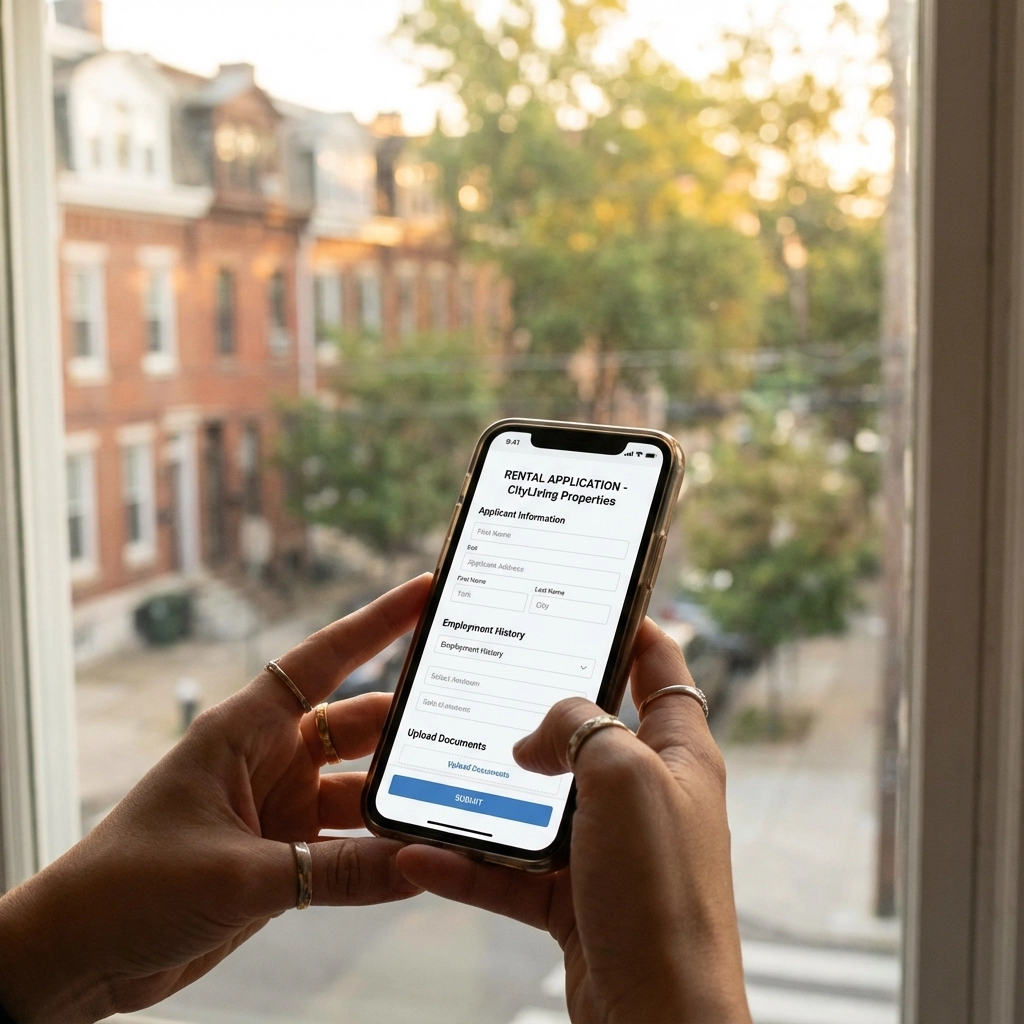
Step 3: Complete the Application Form
Now comes the main event! Fill out every section of the rental application completely and honestly. Double-check everything twice – small errors can delay your approval or even lead to rejection.
Key sections you'll encounter:
Personal information (name, phone, email, Social Security number)
Current and previous addresses
Employment history and income details
Emergency contacts
References from previous landlords
Any pets you plan to bring
Pro tip: If you're unsure about any section, it's better to ask the landlord or property manager for clarification than to guess.
Step 4: Pay the Application Fee
In Philadelphia, you'll need to pay an application screening fee, but the good news is that it's capped at $50 (or the actual cost of screening if it's less). This fee covers background checks, credit checks, and verification of your information. Some property management companies might charge slightly different amounts, but they can't exceed the legal limit.
Step 5: Submit Everything Together
Package up your completed application, all required documents, and your application fee. If you're applying in person, bring copies of everything. If you're submitting online, make sure all your document scans are clear and readable.
Submission checklist:
Completed application form
Application fee payment
All required documentation
Any additional materials requested by the landlord
Step 6: Follow Up Professionally
After submitting your application, it's perfectly fine to follow up. A simple email or call asking about the timeline shows you're genuinely interested. Just don't overdo it – once every few days is plenty.

What Happens After You Apply?
The Waiting Game
Once you've submitted everything, landlords typically take 1-3 business days to process complete applications. During this time, they're busy:
Running background and credit checks
Verifying your employment and income
Contacting your references and previous landlords
Reviewing your overall application package
Most landlords will get back to you within 24-72 hours with their decision.
Possible Outcomes
You might receive one of several responses:
Approval: Congratulations! You'll move on to signing the lease
Conditional approval: You meet most criteria but might need a co-signer or additional deposit
Rejection: Don't take it personally – it could be due to income requirements, credit history, or simply that another applicant was selected
Tips for a Winning Application
Be Honest and Upfront
Honesty really is the best policy. If you have past credit issues or rental problems, consider addressing them briefly in a cover letter. Landlords appreciate transparency, and it's much better than having them discover issues during screening.
Make Yourself Stand Out
In a competitive market, small touches can make a big difference:
Include a brief, professional cover letter introducing yourself
Provide contact information for reliable references
Show proof of renter's insurance (even if not required)
Demonstrate stability through consistent employment history
Have Backup Options
Don't put all your eggs in one basket. Apply to multiple properties that meet your needs and budget. This gives you options and reduces stress if one application doesn't work out.

Common Challenges and Solutions
Income Requirements
If your income doesn't quite meet the 3x requirement, consider these options:
Find a qualified co-signer who earns at least 6 times the monthly rent
Offer a larger security deposit to show financial commitment
Provide additional proof of financial stability (savings account statements, investment accounts)
Credit History Concerns
If you have less-than-perfect credit:
Be prepared to explain any negative marks
Consider offering references from utility companies or previous landlords
Show proof of recent financial stability
Limited Rental History
First-time renters can strengthen their applications by:
Providing strong personal and professional references
Including a cover letter explaining your situation
Showing proof of responsible financial behavior (consistent savings, bill payments)
Know Your Rights in Philadelphia
Philadelphia has strong tenant protection laws that work in your favor. Landlords cannot discriminate based on race, gender, sexual orientation, source of income (including housing vouchers), or other protected characteristics. If you feel you've been treated unfairly, don't hesitate to reach out for help.
Ready to Start Your Application Journey?
Applying for rental housing in Philadelphia doesn't have to be stressful. With proper preparation and the right mindset, you'll be well-equipped to find your next home. Remember, every landlord wants to find reliable, responsible tenants – and with this guide, you're ready to show them that's exactly what you are.
Need more specific guidance on affordable housing options in Philadelphia? Visit our website at https://www.philadelphiaaffordablehousing.com/info for additional resources and current listings that might be perfect for you.
The key to success is preparation, patience, and persistence. You've got this! Start gathering your documents, know your numbers, and get ready to take that next step toward finding your new home in Philadelphia.
Comments